
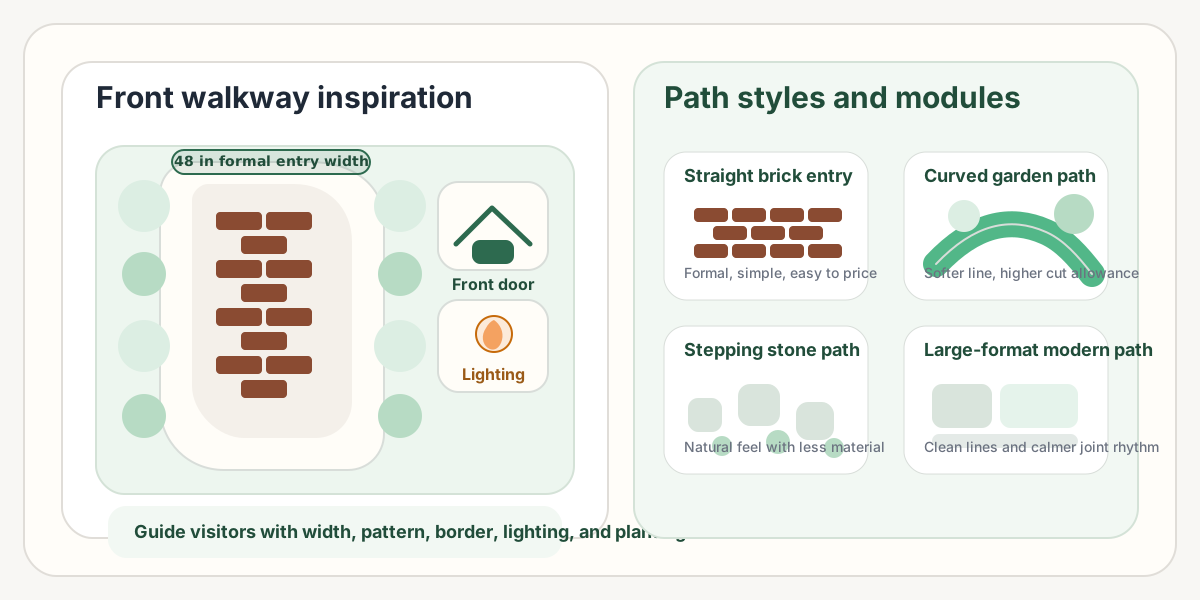
Why Your Walkway Design Matters
A walkway connects spaces, but it also sets expectations. The path from curb, driveway, or side yard to the front door shapes how visitors read the house before they even reach the threshold.
A well-designed entry path guides movement naturally, frames planting beds, and supports the architecture instead of competing with it. Compared with a plain poured strip, paver walkways offer much more flexibility in width, color, border treatment, and repair strategy.
Pavers also stay practical over time. If a section settles or a single unit cracks, you can often reset or replace only the affected pieces instead of tearing out the entire path.
Start by identifying the two spaces the path needs to connect. Once that route is clear, choose a material and pattern that strengthen the journey instead of defaulting to the same look as the driveway.
Function plus curb appeal
A paver path does the same job as a basic slab, but adds pattern, border control, and a more intentional first impression.
Movement matters
The path line itself helps guide the eye to the door, especially when width, planting, and lighting reinforce the route.
Repair stays local
One damaged paver is usually a localized fix, which is one of the strongest practical advantages of paver walkways.
Standard Walkway Widths & Dimensions
Width is one of the first decisions to lock down because it affects comfort, furniture clearance near entries, excavation, and total material volume.
| Use case | Recommended width | Notes |
|---|---|---|
| Single-person walkway | 36 in (3 ft) | Common minimum residential standard |
| Two-person walkway | 48 in (4 ft) | Comfortable for side-by-side walking |
| Accessible route | 36 in minimum | Include about 60 in turning space where needed |
| Formal front entry | 48-60 in | Creates a stronger arrival sequence |
| Garden path | 24-36 in | Can stay narrower if it is a lower-traffic stroll path |
| Side-yard path | 24-36 in | Utility-focused routes often stay compact |
A 36-inch walkway works for many residential paths, but a 48-inch path usually feels noticeably better for day-to-day entry use because two people can pass or walk together more comfortably.
Popular Walkway Paver Materials
Material choice changes the personality of the path immediately. The best fit depends on house style, maintenance tolerance, and whether the walkway should feel formal, natural, or highly durable.
Brick Pavers
Brick is the classic walkway material. It brings warmth, reads well in narrow paths, and pairs especially well with traditional and colonial-style homes.
Concrete Pavers
Concrete is the most flexible walkway option. It can mimic brick, stone, or large-format slabs, and it covers the widest range of colors and surface textures.
Flagstone
Flagstone creates a softer, more organic walkway. It works especially well in garden settings, where the path should feel like part of the landscape instead of a rigid edge.
Cobblestone
Cobblestone has a strong old-world look and exceptional durability. It suits homes that want more texture, more history, and a path that reads as handcrafted.
Slate
Slate offers layered color variation and a more refined natural-stone feel. It can push a walkway toward a modern-natural or Asian-inspired design language.
Permeable Pavers
Permeable systems are designed so water can pass through the joints and into the base below. They look similar to conventional pavers, but support better runoff management.
Permeable pavers allow rainwater to move through the joint openings and drain back into the soil below, which can help manage runoff more effectively than a fully sealed surface.
| Material | Style fit | Durability | Maintenance | Price feel |
|---|---|---|---|---|
| Brick | Traditional / cottage | Very high | Low | Moderate |
| Concrete | Universal | High | Medium | Budget friendly |
| Flagstone | Natural / Mediterranean | High | Low | High |
| Cobblestone | European / classic | Very high | Low | Premium |
| Slate | Modern / natural | Moderate to high | Medium | High |
| Permeable | Universal / eco | High | Low to medium | Moderate |
Popular Walkway Layout Styles
Walkway form is often more important than the surface pattern. These five layout families cover most residential entry paths, from strict formal routes to softer garden paths.
Straight Formal Walkway
A straight path creates the clearest arrival sequence. It feels orderly, formal, and especially appropriate for symmetrical house fronts.
Curved / Freeform Path
Curved walkways slow the approach and feel more relaxed. They blend naturally into planting beds and softer landscape edges.
Stepping Stone Path
Stepping stones use less material and feel especially natural in lawns, side gardens, and lower-traffic stroll paths.
Angled / Diagonal Entry Path
Turning the field 45 degrees adds motion and subtly pulls the eye toward the front door. It is a proven way to make a standard entry feel more dynamic.
Grand Entry with Border Detail
A wider path with a strong border raises the sense of arrival. This layout is useful when the house front needs more visual weight and formality.
Walkway Pattern Ideas
Walkways often benefit from patterns that either emphasize direction or keep the joint rhythm simple and easy to read at a narrow scale.
Running Bond, horizontal
Best for straightforward walkways where the path should feel calm and easy to build.
Running Bond, vertical
Useful when a narrow path should feel longer and more directional from curb to door.
Herringbone
Strongest formal option for entry paths and one of the best choices when the route needs more visual authority.
Diagonal
Best when the entry path should feel more dynamic and visually pull toward the front door.
Stacked Bond
Clean and minimal, especially when the path uses larger slabs and modern edge detailing.
Irregular stone layout
Natural and landscape-friendly, but usually the most cut-heavy and least rigidly geometric.
| Pattern | Best walkway type | Difficulty | Waste |
|---|---|---|---|
| Running Bond, horizontal | Straight walkways and side paths | Easy | 5-10% |
| Running Bond, vertical | Narrow long paths that need visual stretch | Easy | 5-10% |
| Herringbone, 90 degree | Formal entries and higher-traffic paths | Medium | 15-20% |
| Diagonal, 45 degree | Entry walks and focal approaches | Medium | 15% |
| Stacked Bond | Modern minimalist walkways | Easy | 5-10% |
| Irregular stone layout | Natural garden paths | Advanced | 15%+ |
Angled and diagonal field layouts naturally direct the eye toward the front door, which is why they work so well on main entry paths that need more visual pull.
Entry Path Design by Home Style
When the path feels mismatched to the architecture, the front elevation loses coherence. These style pairings help narrow the right walkway form, surface, and detail level.
Traditional / Colonial
Traditional homes usually look strongest with a centered, orderly path that reinforces symmetry.
Modern / Contemporary
Modern houses usually benefit from cleaner geometry, restrained color, and fewer visual interruptions.
Cottage / Rustic
Rustic entry paths feel softer and more landscape-led, often with looser edge conditions and richer texture.
Mediterranean / Tuscan
Mediterranean entry paths combine warm stone tones, decorative edges, and a more crafted arrival sequence.
Walkway Enhancement Ideas
The path surface does not work alone. Lighting, border detail, planting, and structural accents all make a stronger approach when they are planned together.
Walkway Lighting
Lighting improves both safety and mood. Even a modest path feels more intentional when the route is visible after dark.
Border & Edge Details
Borders sharpen the edge visually and help keep the walkway from feeling like a simple strip dropped into the yard.
Planters & Greenery
Planting softens the hardscape edge and helps the walkway feel integrated with the yard instead of isolated from it.
Decorative Pillars & Walls
Entry columns and short walls add presence. They work especially well on wider front walks that need more architectural framing.
Walkway Sizing & Material Calculator
Once width and layout are chosen, turn the walkway into calculator-ready numbers. Straight path math is simple, and even curved paths can be estimated accurately enough for material planning.
Walkway area (sq ft) = Length (ft) x Width (ft)
A walkway that is 20 ft long and 3 ft wide covers 60 sq ft.
Total area to order = Base area x (1 + Waste %)
At 10% waste, a 60 sq ft walkway becomes 66 sq ft to order.
Base material (cu ft) = Area (sq ft) x Depth (in) / 12
Use a 4 to 6 inch compacted base for most pedestrian walkways and about 1 inch of bedding sand above it.
Straight walkways often use about 10% extra. Curved paths, diagonal layouts, and detailed borders usually push the waste allowance toward 15% or more.
Use our free Paver Cost Calculator to estimate pavers, base material, bedding sand, and project cost for your walkway.
Maintenance Tips for Walkway Pavers
-
Keep routine cleaning simple
Sweep regularly and rinse with water as needed so dirt, leaves, and soil do not stay packed in the joints.
-
Spot-clean gently
Use mild soap and a stiff brush on stains. Avoid abrasive metal brushes that can scratch or mark the surface.
-
Use winter tools carefully
Plastic shovels or snow tools with plastic edges are safer than bare metal on finished paver surfaces.
-
Choose deicers carefully
Use deicing products conservatively. Calcium chloride or standard rock salt are common choices, while harsher products such as magnesium chloride can be harder on some paver surfaces.
-
Seal when the material calls for it
Many concrete and natural stone pavers benefit from sealing to reduce staining, algae growth, and weathering.
-
Watch the joints
Weeds, erosion, or empty joints are signs that the jointing sand may need attention or topping up.
-
Repair locally when needed
If one piece chips or settles, reset or replace that section rather than treating the entire walkway as a full tear-out problem.
Pre-sealed or well-protected pavers are often easier to maintain over time because the surface resists algae, weed pressure, salt exposure, and everyday staining more effectively.
FAQ
A 36-inch walkway is a common minimum, 48 inches is more comfortable for two people, and formal front entries often feel best at 48 to 60 inches wide.
Brick is one of the most durable classic choices, concrete is usually the most flexible and budget-friendly, and natural stone often gives the most organic look.
Running bond is the easiest and most versatile, herringbone is one of the strongest and most refined, and diagonal layouts are effective when you want more visual guidance toward the entry.
Wider pavers, diagonal pattern direction, lighter surface color, and generous planting setbacks can all help a path feel broader than its measured width.
Yes. Edge restraint helps keep the field from shifting outward over time, even when the path also has a decorative border course.
Path lights, inground lights, and post lights are the most common options. Solar path lights are often the simplest low-commitment choice because they do not need trenching for wiring.
Straight walkways often use about 10% extra, curved layouts often move toward 15%, and more cut-heavy patterns can push into the 15% to 20% range.